

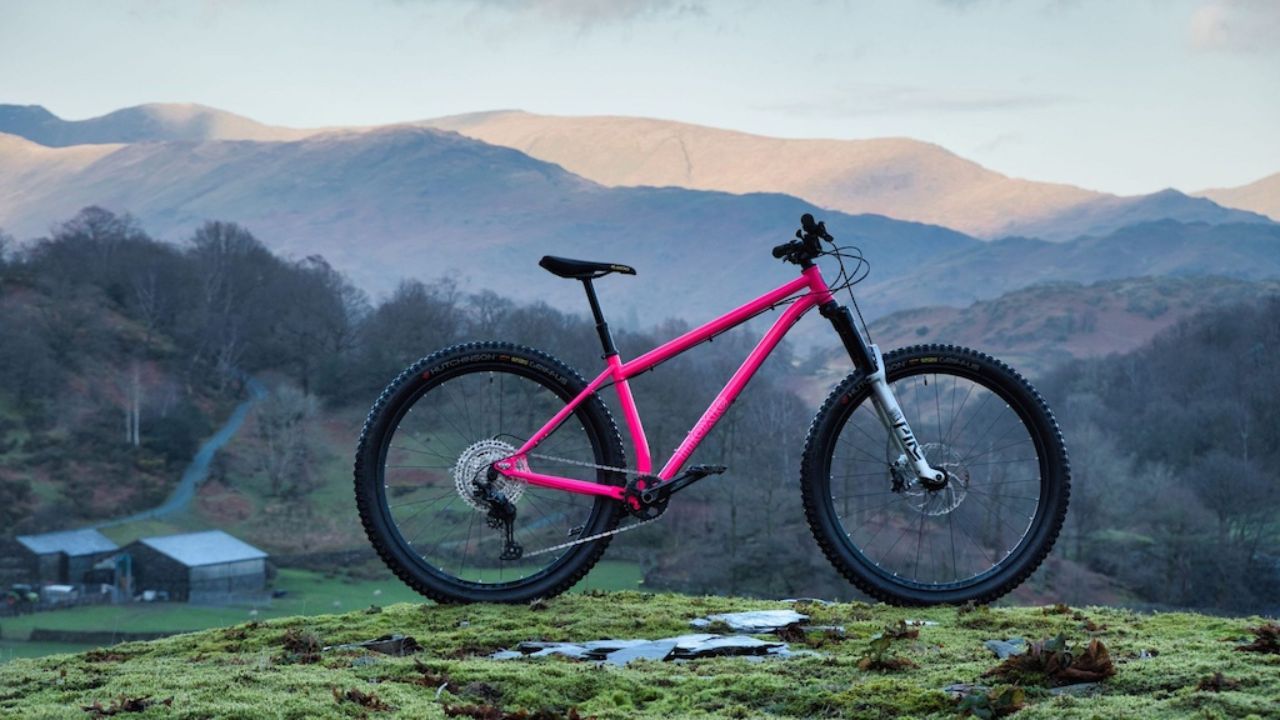
Mountain biking is also becoming popular, and the appropriate choice of the bike can have a great influence on the performance and the overall experience of the ride. The hardtail mountain bikes have remained popular among other sets of mountain bikes and people who appreciate efficiency, speed and lightweight production. Modern hardtail series of mountain bikes are not only built to minimize weight but also to provide a powerful transmission, and thus, it is a cost-effective way for both competitive and leisure riders. The 32er hardtail mountain bike frame engineered for efficiency delivers exceptional performance on every trail.
The Design of Hardtail Mountain Bikes
A hardtail mountain bike has no rear suspension, with a rigid rear triangle. This design is in contrast to full suspension bikes, which have both a front and a rear shock absorber. Hardtails mean a great deal in bringing down the weight and number of moving parts by removing rear suspension. This is further boosted by the use of carbon fiber construction, which is very strong and yet makes the bike light. This is courtesy of the stiff rear end and sophisticated materials that ensure that all the effort that the rider puts into the bike can be effectively passed to the wheels.
The geometry of the frame of hardtail mountain bikes is aptly designed to achieve maximum pedaling efficiency. The longer top tubes, their better seat tube angles, and shorter chainstays make an equilibrium between comfort, control, and speed. Bikinis enjoy accurate handling and enhanced climbing action, which comes in handy on cross-country trails or long-distance rides.
Lightweight Materials for Maximum Performance
The carbon fiber is the preferred choice for high-performance hardtail frames. It has a great strength-to-weight ratio, and thus manufacturers are able to come up with light yet strong frames. Carbon fiber can be shaped into complicated forms, unlike aluminum or steel, maximizing the stiffness of the frame at strategic places and minimizing the amount of material in places of no use. The tuning accuracy of this design is that the bike is structurally sound and does not possess any unnecessary weight.
Light construction does not imply power loss. Quite on the contrary, hardtail mountain bikes are extremely effective in transmitting the energy of the rider to the rear wheel. Each pedal stroke creates a forward motion, and uphill, back surges, and sprints are more efficient. The riders soon realize the distinction when riding over narrow paths, hilly slopes, or tricky obstacles.
Efficient Power Transfer
A hardtail mountain bike is one that has the capacity to harness pedaling power into speed. Riders receive more direct feedback with the trail without the presence of rear suspension, which dissipates force. This direct shift enables more acceleration and responsiveness, especially in smooth or smoothish trails. Carbon fiber is a material that builds on these features by creating stiffness to the bottom bracket and chainstay spots, reducing energy wastage, and maximizing efficiency.
The rigid rear triangle also adds to the improved control and handling. On ascending and descending steep surfaces, the frame-behavior is predictable, and the rider becomes confident in their deed and can perform suitable maneuvers correctly. It is the lack of weight and good power transfer that has made the hardtail popular among competitive riders and trail enthusiasts.
Flexibility and Usability
The hardtail mountain bikes are practical, besides being lightweight and efficient. Their simplistic design has reduced maintenance needs as opposed to the full suspension bikes, which contain more moving parts, and they need shock parts serviced regularly. The weight is also less, and this makes transportation, climbing, and technical trail navigation easier, which is desirable to the riders concerned with both performance and convenience.
Also, the hardtail frames can be changed according to various styles of riding and preferences. The geometry can also be fine-tuned by adjusting the seat posts, stems, and handlebars, and contemporary carbon frames can take wider tires without losing speed. Such versatility of hardtails renders them appropriate in cross-country racing, endurance rides, and recreational trail riding.
Conclusion
Hardtail mountain bikes create a perfect combination of lightness and power. Their stiff rear triangle, carbon state-of-the-art, and efficient geometry make sure that each stroke of the pedal is optimized to make it faster and in control. Eradicating rear suspension, the bikes pass the energy directly to the wheels, and they have a high climbing capacity, responsive handling and require less maintenance. Among riders who want to have a mountain bike that is efficient, versatile, and high-performance, the hardtail frame has a strong combination of lightness and power that will remain the best on the trail, even in the global arena.