

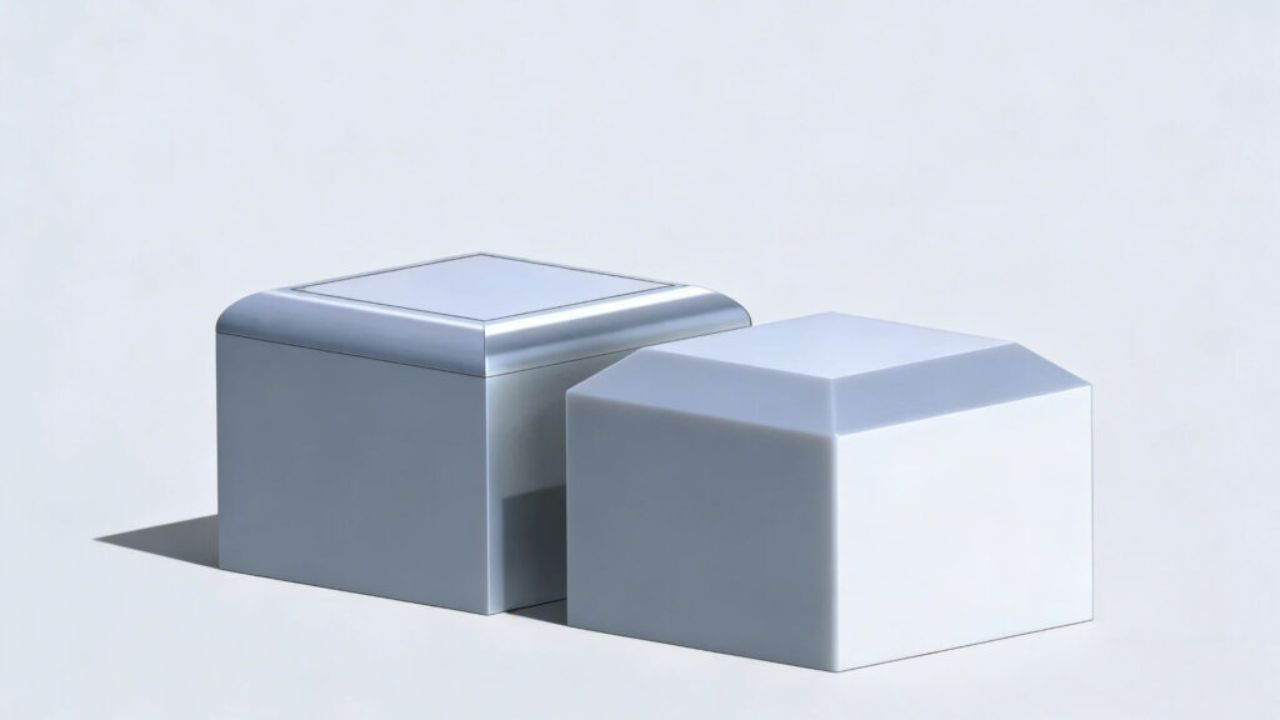
Edge treatment is not a big issue in mechanical design and sheet metal fabrication. As a matter of fact, the decision to use a fillet or a chamfer can have a great influence on the part strength, the manufacturing cost, the efficiency of the assembly process, and the durability. Given that engineers can know the practical distinction between these two kinds of edges, they will be in a better position to design parts that work reliably on the factory floor, rather than in CAD software. This article will describe the difference between chamfer and fillet in depth.
What Is a Chamfer?
A chamfer is a flat, inclined face that has taken the place of a sharp corner 90 degree face. It is normally cut at a 45-degree angle, but when necessary, other angles can also be prescribed. Sharp edges are usually removed by means of chamfers, which enhance safety and direct mating parts in the process of assembly.
Chamfering is easy and effective in terms of manufacturing. The majority of CNC machines, as well as the laser-cutting processes, can produce chamfers relatively easily with the help of standard tools. Since the cut is flat and a minimal portion of tool movement is needed, a chamfer usually saves on machining time and machine cost. This renders them an easy option for mass production and non-critical edges.
There is also extensive use of chamfering in bolt holes and entry points, where they assist in the positioning of fasteners and discourages cross-threading in assembly.
What Is a Fillet?
The rounded transition between two surfaces is referred to as a fillet that is characterized by a radius and not an angle. The fillets may be applied at both internal corners (between two surfaces), which meet in a pocket inside, and external corners (the corner is rounded off).
The fillets are very important for structural integrity. Acute edges cause stress concentration areas where cracks may form under the load or vibration. A fillet spreads the stress evenly on the material, and this is much better in fatigue resistance and strength in general. Due to this reason, fillets are required in load-bearing components, brackets, frames, and those components that are under recurrent stress.
Particles are also safer to work with and more aesthetically pleasing because fillets enhance the ergonomics and visual appeal of the objects.
Manufacturing Cost and Machining Considerations
Among many other differences between fillets and chamfers, one of the most significant is the way of manufacturing them. The ones made are normally cut in one operation using a normal tool, and hence they are cheap and quick to make.
Fillets tend to take more machine time. They can be required to have numerous passes or special equipment like ball end mills, depending on their orientation, so as to give a smooth radius. In horizontal fillets, particularly at a point of contact between a wall and a floor, it can greatly add to cycle time and cost.
That notwithstanding, not every fillet is costly. Vertical internal fillets can be formed naturally by the form of rotating cutting tools and can result in minimal or no additional cost. Knowledge of free fillets with respect to localities where they are expensive is valuable design knowledge for engineers.
Strength and Performance Differences
Mechanically, fillets perform better in most of the structural applications than chamfers. Although a chamfer can be considered as removing sharpness, it nevertheless produces known edges where stress can focus. These areas tend to crack more when they are under heavy loads or cyclic stress.
Fillets remove the sudden geometry change, and forces are able to pass through the part smoothly. This causes them to be the most favorable to use in bending, vibration, or thermal expansion components.
Chamfer, on the other hand, is adequate in the non-structural sides where strength is not a main factor.
Conclusion
To sum up, there is much more to a fillet than meets the eye. The treatment of the edges fulfills a certain engineering need, which affects the strength of the parts, manufacturing, assembly, and their long-life durability. Fillets are very effective in stress concentration reduction and fatigue life, which is necessary for load-bearing and high-performance components. Chamfers, however, are faster, easier and less expensive, especially where assembly capability and non-critical edges are involved. When engineers know when and where to use any of the options, they will be able to create parts that do not merely appear right in the CAD model but also work right and economically in the actual manufacturing conditions.